I get sent “guaranteed 20% ROI” labour-camp deals almost every week. Most of them don’t survive ten minutes of underwriting.
I’m a civil engineer who became a broker, and I work only on the investment side. So I don’t sell you a building — I read it the way I used to read a structure, and I tell you what the math actually does afterthe costs nobody puts on the flyer. Here’s the honest version of labour camp investment in Dubai.
What a “labour camp” actually is
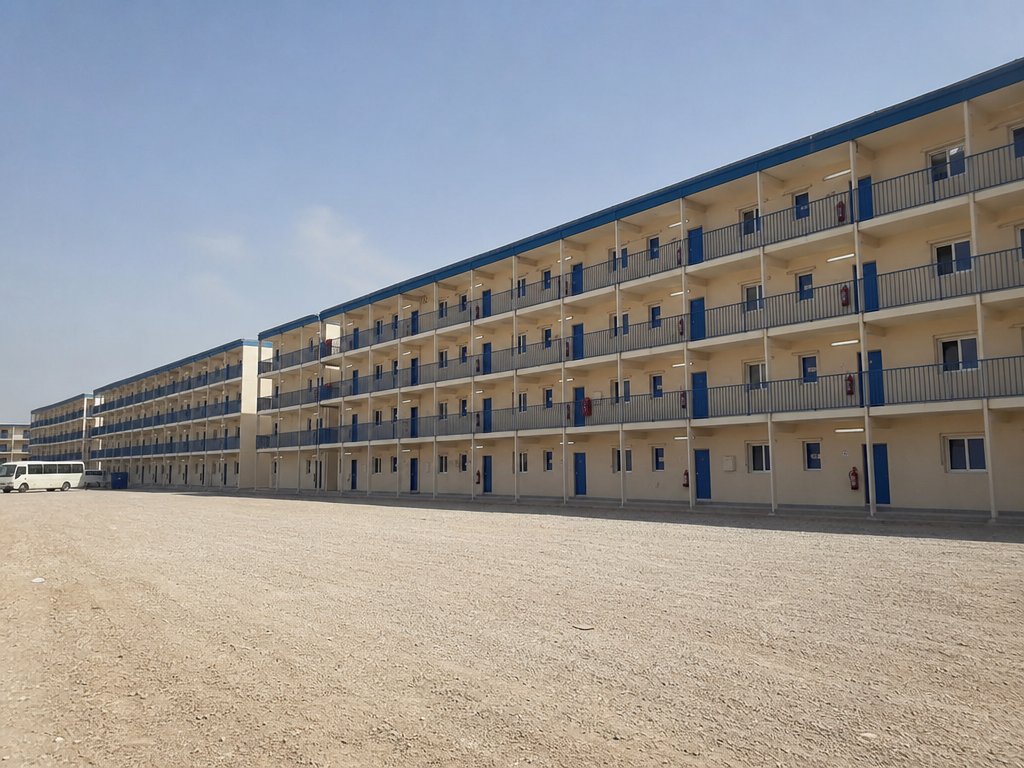
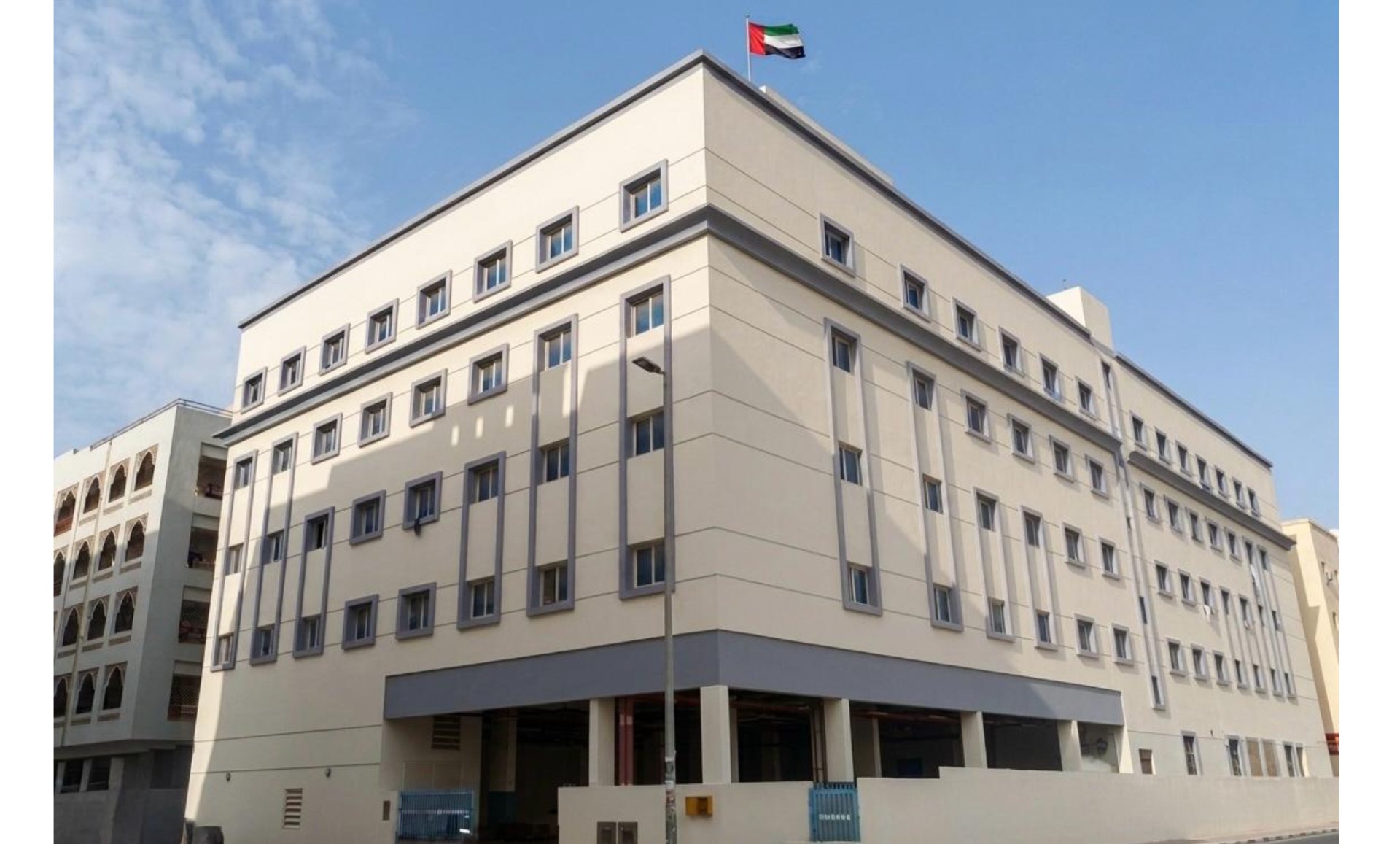
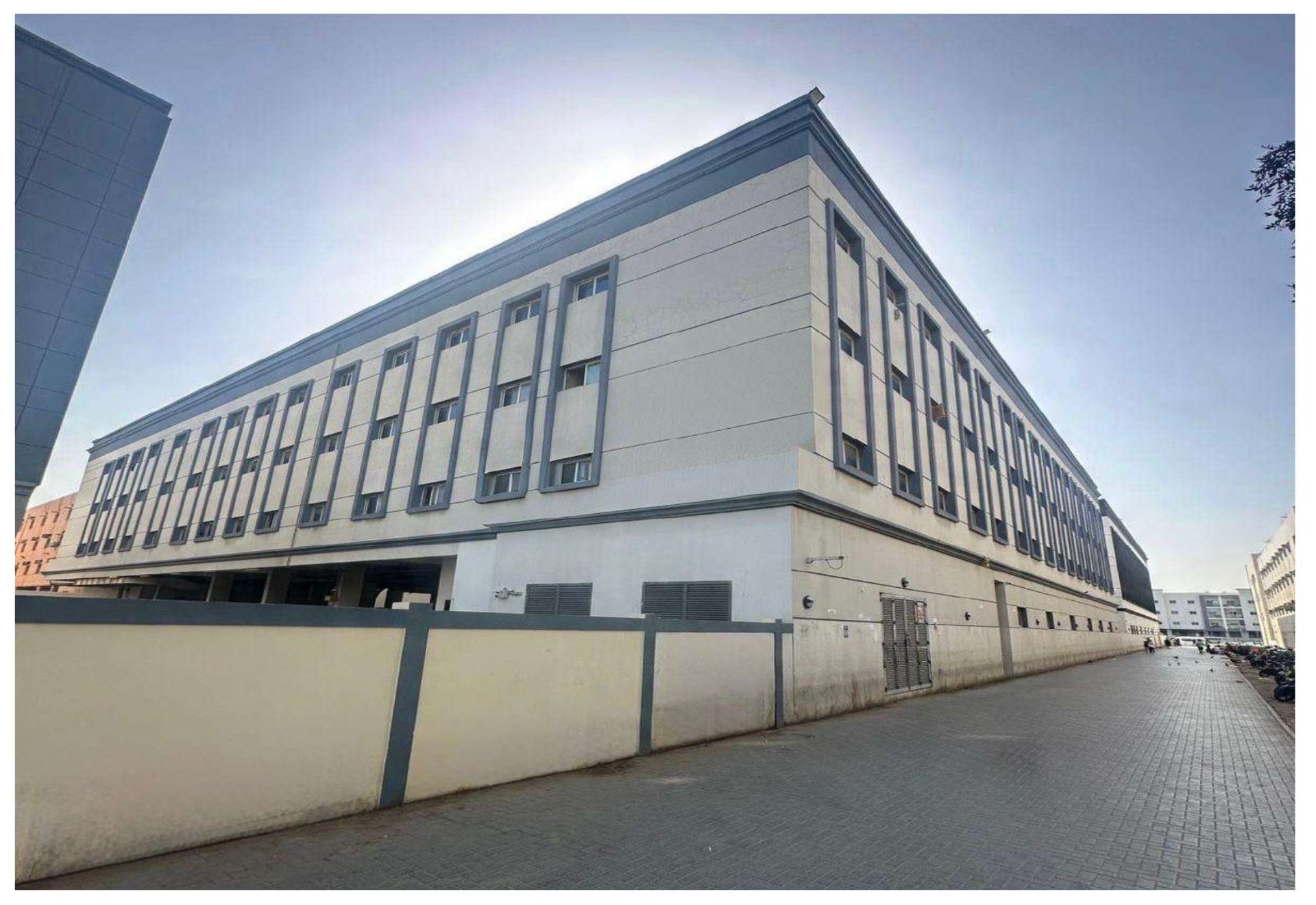
A labour camp — more politely, labour accommodation or staff accommodation— is a purpose-built or permitted building that houses blue-collar workers, usually 4 to 8 to a room, with shared kitchens, ablutions and mess facilities. Tenancy isn’t a single family on a one-year contract. It’s a company leasing rooms or the whole building to house its workforce, typically on multi-year terms.
That tenant profile is the entire investment thesis. You are not underwriting a resident — you are underwriting a corporate lease and the demand behind it.
Why the demand is structural, not a trend
Dubai’s construction, logistics, hospitality and industrial sectors run on a large blue-collar workforce, and that workforce keeps growing as the emirate builds. Accommodation for those workers is regulated and permit-controlled— you can’t simply convert any building into housing for 200 men. That combination — persistent demand plus restricted supply — is exactly what produces durable yield. It’s the opposite of the villa market, where supply floods in with every launch cycle.
The real yields — and why the headline numbers lie
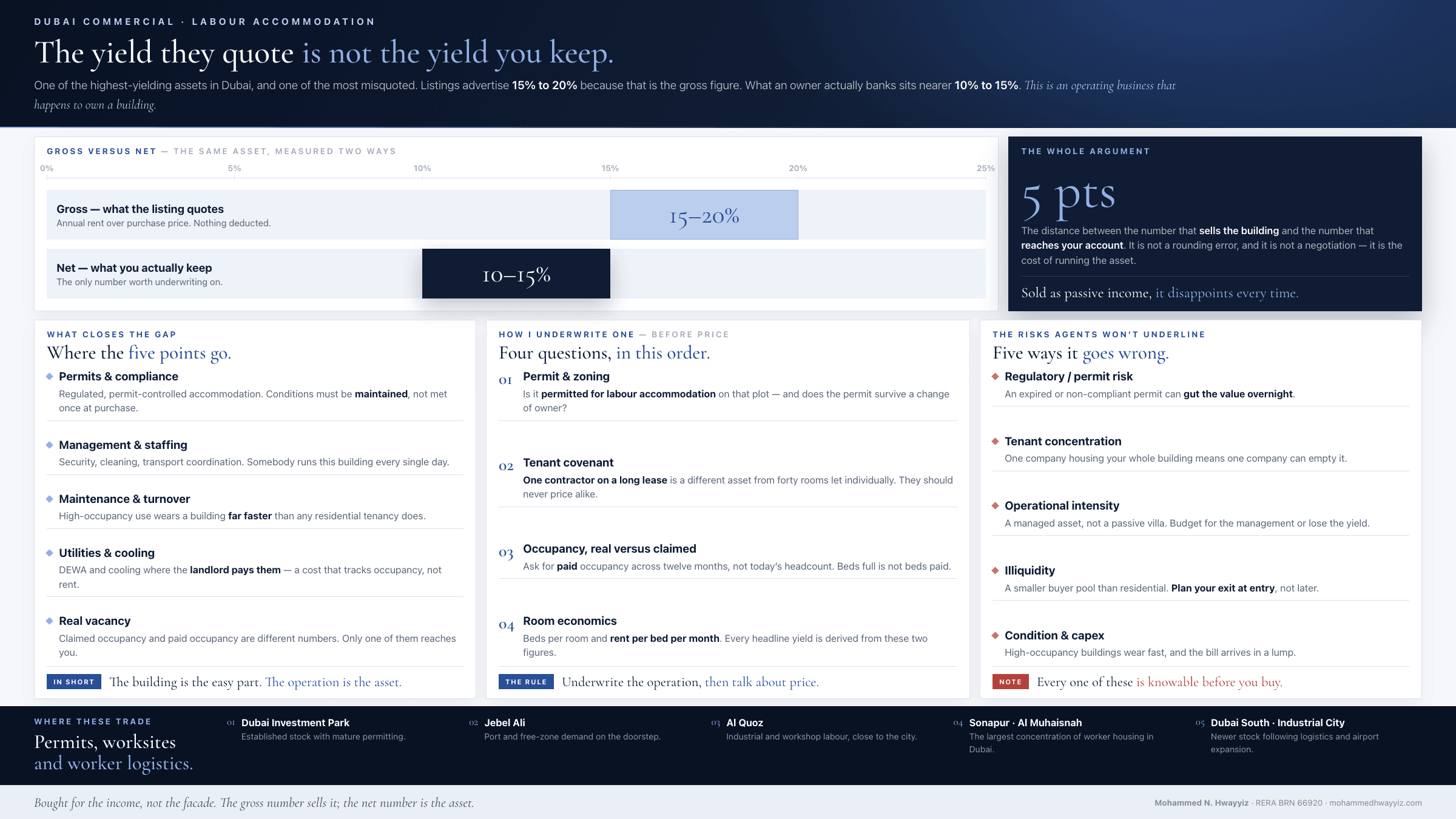
Here’s where the numbers get talked up. You’ll see labour camps advertised at 15% to 20% — and those headline figures are almost always gross, rent divided by price, before a single cost comes out.
What actually reaches your pocket is the net yield, after:
- Service charges and building maintenance (labour buildings get heavy use)
- DEWA / cooling where landlord-paid
- Management — these are operationally intensive assets, not set-and-forget
- Vacancy and rent-collection risk if a tenant company downsizes
- Capex — periodic refurbishment of high-occupancy rooms
Here’s the honest number: a well-bought, fully-tenanted labour camp in a strong industrial zone genuinely nets in the region of 10% to 15%— better net income than almost anything else in Dubai real estate. But it’s not the 20% on the flyer.
The gap between the gross headline and the real net is the whole game — so you know the true number before you buy, not after.
Where to buy — the zones that matter
Location for labour accommodation isn’t about prestige. It’s about permits, proximity to worksites, and worker logistics. The zones investors actually compete over:
- Dubai Investment Park (DIP) — the deepest, most liquid market for labour buildings.
- Jebel Ali — proximity to the port and free zone keeps demand high; often the strongest yields.
- Al Quoz — smaller units, close to central Dubai worksites.
- Sonapur (Al Muhaisnah) — the traditional, high-density labour housing area.
- Dubai South / Dubai Industrial City — newer stock near the logistics and aviation corridor.
How I underwrite a labour camp
Before I send a client a labour-camp brief, the asset clears a checklist. The short version:
- Permit & zoning Is the building legally approved for labour accommodation, and is that permit current? The most common way investors lose money here.
- Tenant covenant Who’s the lessee, how strong is the company, how long is the lease, and how concentrated is your income in one tenant?
- Occupancy, real vs. claimed Bed count, current occupancy, and the actual collected rent — not the rent roll on paper.
- Room economics Rate per bed, service charges, and the true operating cost per room. On a distressed building, check the arrears too — unpaid service charges attach to the unit, not to the seller who ran them up.
- Building condition A civil engineer’s read on structure, MEP, fire compliance and inherited capex.
- Exit liquidity Who buys this from you in five years, and at what yield.
Only the assets that survive all six get to you. The method stays mine; the answer is yours when we talk.
The risks agents won’t underline
- Regulatory / permit risk — an expired or non-compliant permit can gut the value overnight.
- Tenant concentration — one company housing your whole building means one company can empty it.
- Operational intensity — this is a managed asset, not a passive villa.
- Illiquidity — a smaller buyer pool than residential; plan your exit at entry.
- Condition & capex — high-occupancy buildings wear fast.
Those risks change shape when the seller is under pressure. Buying a distressed commercial asset means asking first whether you are buying a distressed owner or a distressed building — three of the four causes are asset problems, and only one of them is a bargain.
The bottom line
Labour camps can be one of the best income plays in Dubai for the right investor — durable demand, restricted supply, and genuine double-digit netyields of 10–15% on a well-bought asset. But the asset punishes anyone who buys the flyer instead of the fundamentals. Underwrite the permit, the tenant and the true net number, and it’s a serious cash-flow machine.
If you’re weighing a labour-accommodation deal — or want me to underwrite one you’ve been offered — let’s talk. See how commercial property ROI works in Dubai, browse available commercial assets, or look at the below-market commercial assets I’m currently holding.